Clearing a Lot to Build: Which Trees to Keep and How to Keep Them Alive
A tree hurt by construction can take years to die, long after the house is finished. How to decide what stays, what goes, and what the builder has to stay away from.
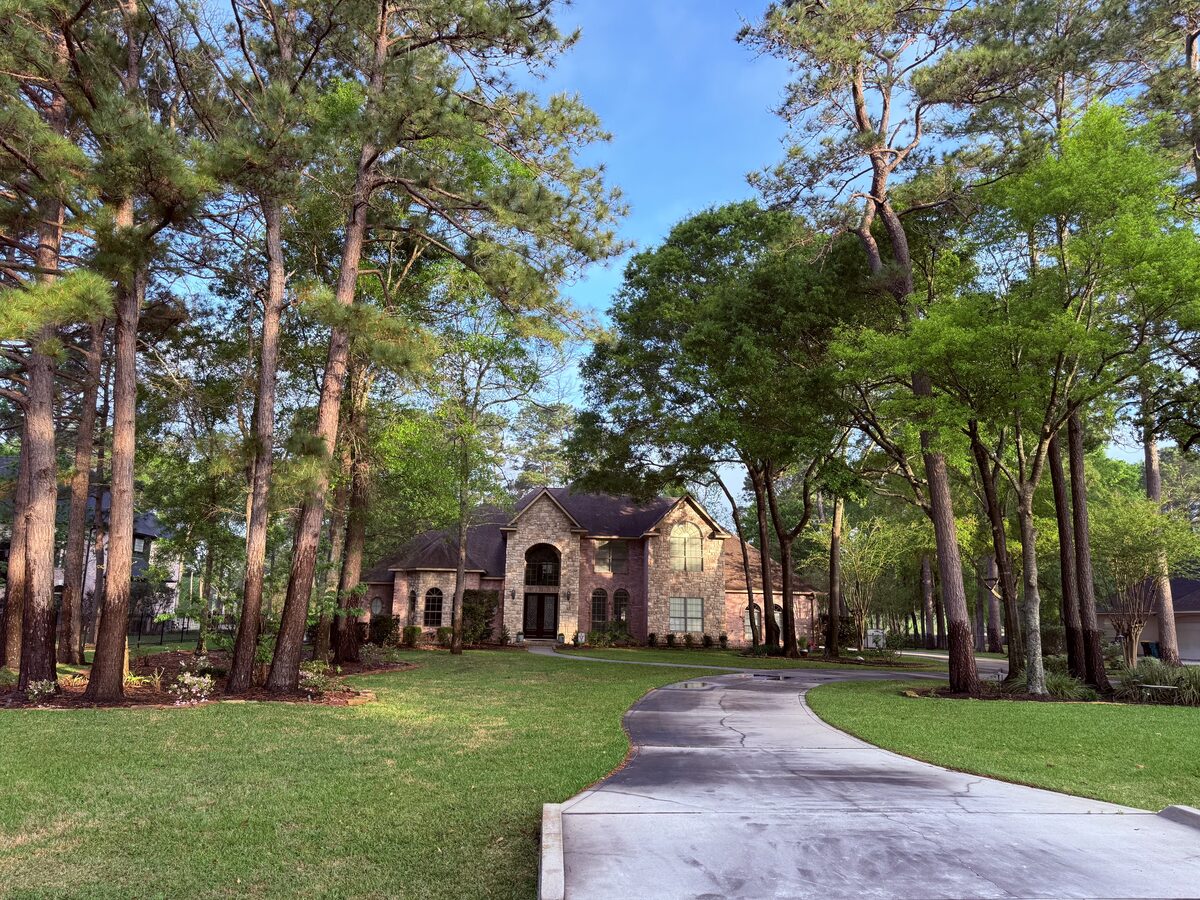
Spring is when a lot of wooded lots north of Houston finally get built on. The survey is done, the slab is staked, and somebody has to decide which of the trees on that lot are still going to be standing when the family moves in.
Most people make that call by looking at where the house goes and saving whatever isn’t in the way. That’s how you end up with a big pine ten feet from the new garage that looks fine at the walkthrough and is dead two summers later. The tree wasn’t in the footprint. Its roots were.
So here’s how we think about a lot before the equipment shows up.
Why trees die after the house is finished
Texas A&M Forest Service names three main causes of tree death during and after construction: soil compaction, grade changes, and root severance. None of them is the bulldozer hitting the trunk. All three happen underground, and all three are about the roots.
Compaction. Loaded trucks, a skid steer making the same trip fifty times, pallets of brick parked under a shade tree because it’s convenient. The soil gets pressed tight, and roots in tight soil can’t get the air and water they need.
Grade changes. Adding fill to raise a pad or level a yard buries roots deeper than they can breathe. The Forest Service recommends adding no more than two inches of fill in a given year around a tree you want to keep. Cutting the grade down is the opposite problem: it strips away roots and the richest topsoil with them.
Root severance. A trench for the water line, the sewer tie-in, the electrical run. One straight cut across one side of a tree can take out a big share of what feeds it.
The catch is timing. The Forest Service notes that it may take several years for trees to adjust to the injury and site changes that come with construction. That delay is why nobody connects the dead oak in year three to the utility trench in year one.
Deciding what to keep
Not every tree on a lot is worth the effort of protecting it. The Forest Service is direct about which ones should come out before construction starts: trees with wilted leaves, broken or dead limbs, trunk rot, poor form, a heavy lean over where the building will go, or severe insect or disease problems.
That list is worth taking seriously for a practical reason. It is far easier and cheaper to remove a tree on an open lot than to take the same tree down a few years later between a finished roof, a fence and a pool. A lot is the one time in the life of a property when every tree can be reached from every side.
What we look at when we walk a lot with an owner:
- Health first. Full canopy, no dead tops, no rot at the base. A tree that’s already struggling won’t survive the added stress of construction.
- Distance to the slab and driveway. A healthy tree that will lose half its roots to the foundation isn’t a keeper, however nice it looks today.
- Where the utilities will run. Ask the builder for the planned routes before anything is marked to stay. A trench changes the answer.
- Pines near the house. Loblolly pine fills a lot of the wooded lots up here, and construction stress is exactly what sets pines up for beetle trouble. More on that below.
If you want a second look at how removing some trees can help the ones that stay, our New Caney guide on thinning around the trees you keep covers the same idea on an existing yard.
Protecting the trees that stay
Once the keepers are chosen, the job is to keep equipment and materials off their roots for the whole build. The Forest Service guidance comes down to a few things.
Fence it before work starts. A tall, highly visible fence around each tree you’re saving, set roughly one foot out from the trunk for every inch of trunk diameter. A tree 20 inches across gets a fence about 20 feet out. That fenced area is off limits: no parking, no stacking materials, no washing out concrete trucks, no “just for a minute.”
Plan the utilities around the trees. When a line can’t be rerouted, the Forest Service points to tunneling or hand-dug trenches near trees rather than a trencher cutting straight through the root zone.
If the grade has to come down, prune the roots ahead of time. The Forest Service recommends root pruning at least four to six months before construction when lowering the grade is unavoidable. A clean, planned cut heals better than roots torn out by a blade.
Mulch the protected area. A three-inch layer of mulch inside the fenced zone helps hold moisture and cushions the soil.
Put it in writing with the builder. The Forest Service suggests tree preservation specifications that spell out what can and cannot be done around trees you’re keeping, with fines and penalties included. A fence works better when the crew knows it’s in the contract.
The pines need extra care
Around Tomball, Magnolia, Spring and The Woodlands, a typical wooded lot is loblolly pine with hardwoods mixed in. The Forest Service identifies root damage from construction and drought as the two most common stresses on yard pines, and stressed pines are what pine engraver beetles (Ips) go after. The beetles rarely kill a healthy tree. They finish off one that construction already weakened.
The Forest Service’s advice on prevention is simple: avoid damaging the root system, limit compaction around the roots, and water slowly and deeply during dry spells. On a build site, that means the pines you keep get the same fence as the hardwoods, and they get watered through the first hot summer after the house is done.
If a pine does get hit, the Forest Service says the best course is to cut the infested tree and remove it from the property. Felling it and leaving it in place doesn’t help.
Oaks on a spring build
Oaks come with one more rule, and it matters most in spring. Texas A&M Forest Service and AgriLife Extension advise against pruning or wounding oaks from February through June, when the insects that spread oak wilt are most active. Any wound on an oak, in any season, should be painted right away.
On a lot being cleared in April, that means limbs on the oaks you’re keeping get raised for equipment clearance only where it’s unavoidable, every cut gets painted on the spot, and anything that can wait gets scheduled for after June. A skinned trunk from a careless machine is a wound too, which is one more reason the fence goes up first.
After the build
A tree that made it through construction still has a few rough years ahead. Water deeply during dry stretches, keep the mulch in place, and keep an eye on the canopy. Thinning at the top, leaves that come in small, or dead branches showing up in the crown are all signs of stress worth having someone look at.
And if a tree that seemed fine at the walkthrough starts to decline, don’t wait on it near the house. Our Kingwood guide to the tree removal process walks through what a planned removal looks like, and our Spring guide on tree roots and foundations covers the other half of living with big trees close to a slab.
Walk the lot before the equipment shows up
The cheapest time to get this right is before the first tree comes down. We clear lots across Greater Houston, and when we do, we’ll walk it with you first, tell you honestly which trees are worth keeping and which ones will cost you later, and remove the rest cleanly with the roots handled so they don’t cause trouble under the new yard.
Ask for a free estimate and we’ll come look at the lot with you. We cover Houston, Kingwood, Humble, Conroe, The Woodlands, Spring, Tomball, Cypress and Katy.
Sources: Texas A&M Forest Service, “Protect Tree Roots During Construction”; Texas A&M Forest Service guidance on pine engraver (Ips) beetles; Texas A&M Forest Service and Texas A&M AgriLife Extension guidance on oak wilt pruning timing and wound painting.
Tree on your mind? Let's take a look.
Family-owned. Licensed and insured. Owner-supervised. We respond within 24 hours.