The Hardest Stumps to Grind in Spring, TX
Not all stumps grind the same. In Spring, TX the toughest are the big old hardwood stumps in packed clay soil.
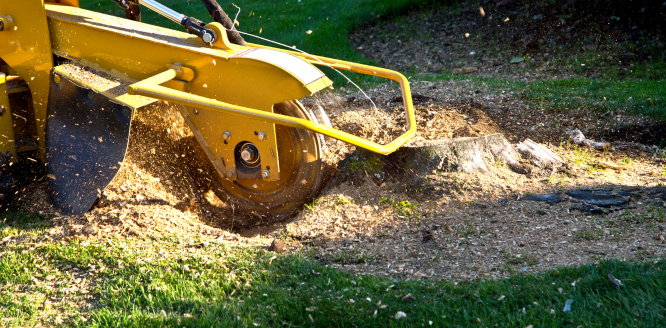
People ask us this all the time in Spring: what’s the worst stump to grind? Easy answer. A big, old hardwood stump that’s been sitting in this Northwest Harris County clay for twenty or thirty years. Those are the ones that eat time, chew through grinder teeth, and surprise the homeowner who thought it’d be a quick afternoon.
Here’s why they’re so much work, and what actually drives the price when you call for a stump quote around Spring, Klein, or out toward Cypress Creek.
Why old hardwood stumps are the hard ones
A stump’s difficulty comes down to three things: what species it is, how big the root flare is, and what’s in the soil around it. Old hardwoods lose on all three.
The wood is dense. Live oak, water oak, post oak, and pecan grow slow and grow hard. A pine stump of the same diameter grinds like butter by comparison. Hardwood fibers are tight and full of old, dried sap that gums the cutting wheel. The grinder has to work every inch instead of tearing through soft growth rings.
The root flare is huge. With a mature oak, the visible stump is the small part. Below the surface the trunk fans out into a wide buttress of structural roots, sometimes four or five feet across before it even starts to narrow. Grinding a stump means grinding that whole flare down below grade, not just the nub you see. A 30-inch oak can mean twice the material of a 30-inch sweetgum.
Our soil hides grit and moves the target. Spring sits on the Gulf Coast clay belt. That heavy black clay packs tight around old roots and traps sand, gravel, and the occasional buried brick or old fence footing. Every time a carbide tooth catches a rock, it dulls or chips. On top of that, decades of clay shrink-swell can push a root plate deeper than you’d guess, so the grinder has to chase roots that dove down instead of spreading flat.
Add one more Spring wrinkle. Water oaks and a few other hardwoods are aggressive resprouters. Grind one too shallow and it’ll push suckers back up through the mulch by summer. On the tough species we go deeper on the flare specifically to stop the regrowth.
What actually sets the price
Stump grinding around here isn’t priced by guesswork. When we quote a job, we’re reading a few things:
- Diameter at the widest point of the flare, measured at grade, not the skinny top of the cut.
- Species and age — a seasoned oak or pecan is a different job than a young Bradford pear.
- Access — can the grinder get through the gate, or is it a wheelbarrow-width side yard and a hand-fed walk-behind machine?
- How deep you need it — a future flower bed or new sod wants a deeper grind than a spot you’re just going to mulch over.
- What’s near the stump — sprinkler heads, gas and electric lines, a septic field, a foundation, or a fence the roots grew into.
That last one matters more in Spring than folks expect. A lot of these older neighborhoods have shallow utility runs and irrigation lines threaded right past mature trees. We call in line locates and hand-probe around anything questionable before the wheel touches dirt. A cracked sprinkler main is a bad way to save an hour.
Grinding vs. full root removal
Most Spring homeowners want grinding, not full excavation. Grinding turns the stump and the upper flare into mulch six to twelve inches below grade, you fill the hole, and you can plant grass over it. Full mechanical root removal tears the entire root ball out with an excavator, which leaves a crater and tears up half the yard. For a big hardwood near a house, grinding is almost always the right call. We’ll tell you plainly if your situation is the rare exception.
The honest part
A giant oak stump is not a cheap grind, and anybody who quotes you a flat rock-bottom number over the phone without seeing it is guessing. It might be fine. It might also hit a buried slab of old patio concrete two inches down and turn into a two-hour fight. We’d rather look at it, measure the flare, check for lines, and give you a real written number.
We’re a family-owned, licensed and insured tree service based in the Greater Houston area, and the owner is on the job. If you’ve got an old hardwood stump in the yard that’s been bugging you for years, the leftover from a removal, a storm loss, or a tree the previous owner cut and walked away from, let’s get it gone.
Get a free stump grinding estimate in Spring, TX:
Tree on your mind? Let's take a look.
Family-owned. Licensed and insured. Owner-supervised. We respond within 24 hours.