Why Trees Come Down in Galveston, TX
On Galveston Island, salt, sand, and storms decide which trees survive. Here's why removal becomes necessary and what the step-by-step process looks like.
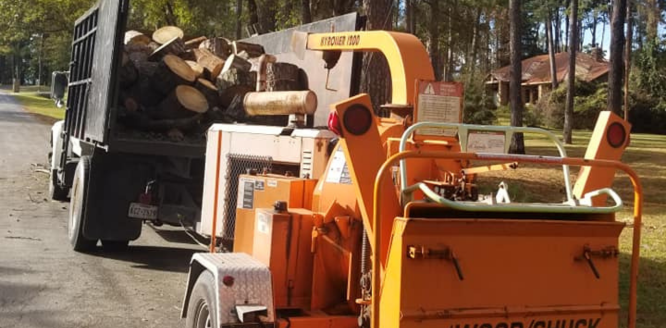
Growing a tree on Galveston Island is a fight against the environment, and everybody who lives here knows it. Salt spray coats the leaves. The soil is sandy and drains fast, so roots never get the deep anchor they’d have on the mainland. Storm surge pushes saltwater over the ground and burns whatever it touches. The trees that make it, the live oaks, the oleanders, the palms, the salt cedars, earned their spot. When one starts to fail, there’s usually a real reason, and letting it stand can cost more than taking it down.
Galveston remembers what a bad storm does to trees. Ike killed something close to 40,000 of the island’s trees in 2008, a loss the city is still replanting from. So the decision to remove one isn’t taken lightly here. But sometimes it’s the right call.
Why removal becomes necessary on the island
A few things send island trees past the point of saving.
Saltwater intrusion. When surge or a high tide pushes salt into the root zone, a tree can green up one more spring and then quietly die from the roots up. By the time the canopy thins, the tree is often already dead wood standing.
Storm damage that never healed. A live oak that lost half its crown in a blow will sometimes hold on for years with a split trunk or a cracked leader. That crack is a failure waiting for the next tropical system.
Rot and pests. Sandy soil and constant moisture invite fungal rot at the base. Palms get their own troubles, from bud rot to weevils. Once the core is gone, the tree is a hazard whether it looks alive or not.
Root loss and lean. Shallow island root plates get undermined by erosion and drainage work. A tree that leans a little more each year is telling you the anchor is giving way.
Removing a compromised tree before hurricane season is far cheaper and safer than clearing it off your roof afterward, when every crew on the island is booked solid.
What the removal process looks like, step by step
People picture tree removal as one big cut and a crash. On a tight island lot, near a neighbor’s cottage or a raised-foundation home, it’s the opposite of that. It’s slow, deliberate, and controlled.
Here’s how a real removal runs:
- Assessment and plan. The crew walks the tree, checks the lean, the wind off the Gulf, the soil, and everything inside the fall radius. That decides whether the tree gets felled in one piece or taken down in sections.
- Clear the zone. Cars, patio furniture, anything breakable moves out of the work area. Drop cloths and plywood go over anything that can’t.
- Section the canopy. On most island lots there’s no room to drop a whole tree, so the top comes off in pieces. A climber or bucket operator removes limbs from the top down, and each piece gets lowered on rope instead of tossed.
- Take the trunk. With the weight off the top, the trunk comes down in controlled sections, felled into a clear space or lowered piece by piece.
- Grind or pull the stump. The stump gets ground below grade so you reclaim the spot and don’t invite rot and pests into the surrounding soil.
- Haul and clean. Wood, brush, and debris get hauled off, and the crew rakes the site so your yard looks better than when they showed up.
The whole thing is engineered so the tree never goes anywhere it isn’t supposed to. That’s the part a homeowner with a ladder can’t replicate.
Why the island makes it a pro job
Salvage value is low and risk is high. Island lots sit close together, homes are often up on piers with utilities running underneath, and the wind can turn fast this close to open water. A licensed, insured crew carries that liability and has the rigging to work in tight space. If a tree fails mid-cut on a DIY job, it’s your house, your neighbor’s roof, or you.
There’s an insurance angle too. A healthy tree lost to a hurricane is usually a covered claim. A tree you knew was dead is often written off as neglect. Documented removal by a real service keeps your coverage honest.
If you’ve got a tree on the island that’s giving you doubt, have somebody look before the next storm forces the decision.
Tree’s 101 serves Galveston and the greater Houston area. We’ll walk your property, tell you honestly whether it needs to come down, and put a written estimate in your hand at no cost.
Tree on your mind? Let's take a look.
Family-owned. Licensed and insured. Owner-supervised. We respond within 24 hours.