Fall Tree Care in Houston: Mulch Now, Fertilize Later
Most Houston yard trees never need fertilizer, and October is the wrong month for it anyway. What a tree coming off a dry summer actually needs this fall.
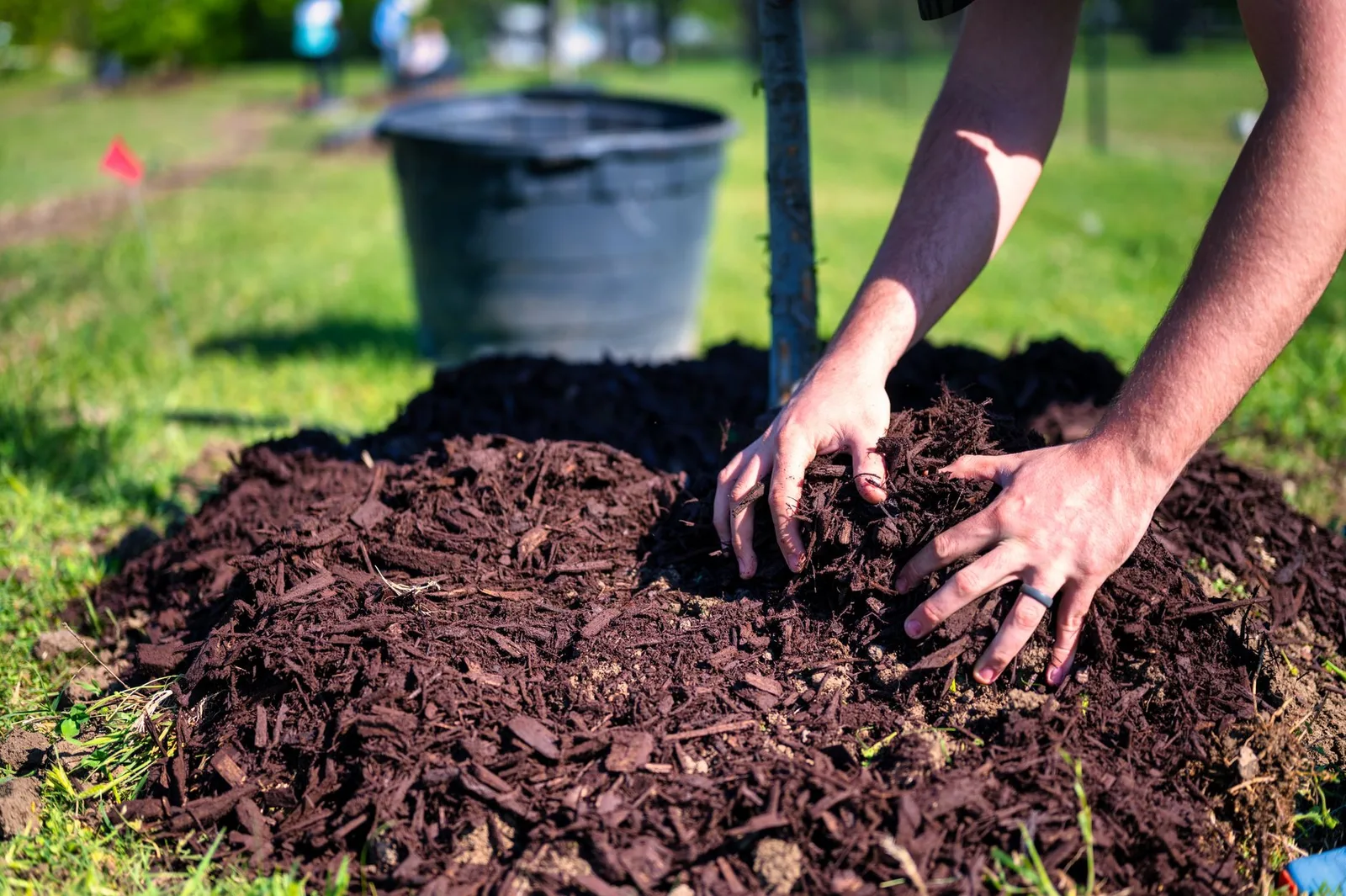
Every October the garden centers put the tree and shrub fertilizer up front, and every October the same question comes in: should I feed my trees before winter? For most yards in Houston, the answer is no. Not now, and for a lot of trees, not ever. What a tree wants coming off a Houston summer is water and a proper mulch ring. Fertilizer is a late-winter decision, and only after you know the soil needs it.
Texas A&M Forest Service says it in one line: most landscape trees do not need fertilizer, and the better use of your time is watering and mulching. That is the whole plan for October.
What the summer did to the root zone
A mature oak or pecan spent June through September pulling water out of clay that was baking and cracking. The fine feeder roots that do most of the work live in the top foot or so of soil, right where the heat hit hardest, and some of them died back. The tree shed leaves early to cope, which we covered in why trees drop leaves in August, and it is now trying to rebuild reserves before it goes dormant.
Fertilizer does not fix any of that. Pushing nitrogen at a stressed tree asks it to grow new tissue it cannot support, and Texas A&M AgriLife Extension is blunt about the timing: late-summer and early-fall applications stimulate growth that is more likely to be hurt by a freeze. Their guidance is not to apply fertilizer from August 1 until late fall at all.
Water and mulch fix a lot of it.
Mulch first, and do it right
The Forest Service lists what a mulch ring does for a tree: it conserves water, cuts weed and grass competition, and evens out soil temperature. On a Houston lot that is the difference between soil that stays workable through a dry November and soil that turns to brick.
The specifics matter more than the material:
- Two to three inches deep, no more. That is the Forest Service cap, and deeper is not better.
- Out to the edge of the branches if the lawn will let you. A three-foot ring around a forty-foot oak is a gesture.
- Nothing against the trunk. Leave a clear gap of bare soil around the bark. The mulch volcano piled up the trunk that you see all over town holds moisture against the bark and invites the rot it looks like it is preventing. The Forest Service calls it out by name.
- Organic, not plastic. Shredded bark, wood chips or pine straw. Plastic sheeting under mulch blocks water and air from the roots. White or black rock is on their avoid list too.
Keep watering, even though it feels done
The weather turns pleasant in October and everyone puts the hose away. The ground does not know that. A Houston fall can run dry for weeks, and a tree that lost roots in August is still catching up.
The method is the same one that helps in summer: slow, deep soaking at the drip line, not a sprinkler at the trunk. A soaker hose looped under the outer canopy, run until the water has gone down several inches with no runoff, once a week or so in a dry stretch. Stop when the rain comes back. Newly planted trees are a different schedule entirely, and we laid it out in the fall planting guide.
The honest answer on fertilizer
Some trees do need feeding. The signs AgriLife lists are shorter-than-normal twig growth year after year, pale green or yellow leaves, small leaves, dead branches, and leaves dropping early. A mature tree putting on six to nine inches of new growth a year is doing fine on its own. One putting on almost nothing, with a thin pale crown, may be short on nitrogen. Or it may be sitting in compacted clay, fighting root rot, or dying back from a construction cut three summers ago. Fertilizer only helps the first one.
So the order is:
- Test the soil before you buy anything. The Forest Service says to have it tested if you suspect a nutrient problem, and Texas A&M AgriLife Extension runs a soil testing lab in College Station with a homeowner form.
- Wait for late winter. AgriLife’s best window is late winter, before spring growth starts. On heavy clay, which is most of Houston, they suggest mid-winter after the tree is fully dormant.
- Spread it, do not drill it. Their guidance is that surface application over the whole area under the branches works as well as the old method of punching holes around the tree. Water it in deeply afterward; fertilizer needs moisture to move, and it will burn roots in dry soil.
- Follow the label. The Forest Service warns that too much can harm or kill the tree.
Or skip the bag. The Forest Service’s own suggestion is a thin layer of compost under the mulch each year. It feeds the soil slowly and cannot burn anything.
Two things that quietly hurt trees every fall
Weed and feed on the lawn. Those products carry a broadleaf herbicide, and a tree is a broadleaf plant. The Forest Service lists leaf curling, discoloration, branch dieback and outright death as results of applying weed-and-feed over a root zone, and an oak’s roots run far past the drip line, under most of the lawn.
Feeding a newly planted tree. Do not. It forces top growth before the roots can support it. Give it time to settle in first.
When to have someone look
Call when the tree is telling you something bigger:
- A crown that stayed thin after the August leaf drop and is not filling back in
- Mushrooms or shelf fungus at the base of the trunk
- Bark splitting or peeling on the trunk or major limbs
- New dieback at the tips of the branches, working inward
Those are the signs we walk through in the dead or dying tree guide, and none of them is a fertilizer problem. Building proper mulch rings and cleaning up the deadwood that a hard summer leaves behind is part of our regular trimming and landscape work. If you want a straight read on which trees are recovering and which are not, ask for a free estimate. We serve Houston, Conroe, Magnolia, Tomball, The Woodlands, Spring, Cypress, Kingwood and Humble.
Sources: Texas A&M Forest Service guidance on fertilizing and mulching landscape trees; Texas A&M AgriLife Extension Earth-Kind guidance on fertilizing woody ornamentals; the Texas A&M AgriLife Extension Soil, Water and Forage Testing Laboratory.
Tree on your mind? Let's take a look.
Family-owned. Licensed and insured. Owner-supervised. We respond within 24 hours.