Hurricane Tree Prep: What to Do in August
Peak season runs mid-August through October. What actually reduces the chance a tree comes down on your Houston house, and what is wasted money.
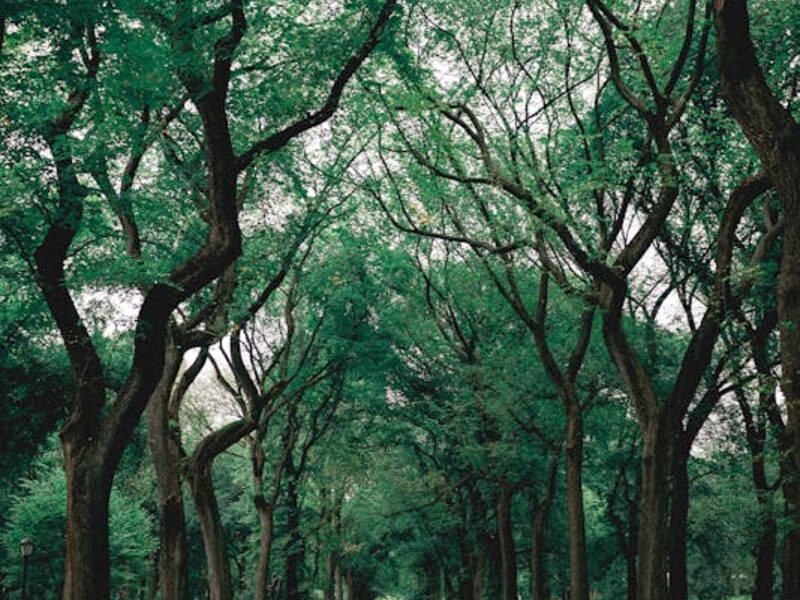
Peak season for this part of the coast runs from about mid-August into October. If you are going to do anything about the trees around your house, now is the window, because the week a storm has a name is the week nobody can get to you.
Some of what gets sold as storm prep genuinely reduces risk. Some of it does nothing. And one very common practice makes a tree considerably more likely to fail in the next storm than it was before.
Start by looking, before you cut anything
Most trees that come down in a storm were already compromised. The wind is what finishes them, not what causes the problem. So the highest-value hour you can spend is walking your property and actually looking.
Stand back far enough to see the whole tree, then look for these.
Dead limbs still up in the canopy. Bare when everything else has leaves, bark falling away, no give when they move. These come down first and they come down hard.
A lean that is new. Trees that grew at an angle are usually fine. A tree that has recently started leaning is a different animal, especially if there is cracked or heaving soil on the side opposite the lean. That is the root plate lifting, and it is one of the more serious things you can find in a yard.
Mushrooms or conks at the base or on the trunk. Fungal fruiting bodies on a living tree usually mean decay inside it. The tree can look full and healthy up top while the structural wood at the base is going.
Cavities, seams, and open wounds on the trunk, particularly where a large limb was removed years ago.
Tight V-shaped forks where two big stems meet in a narrow crotch, often with bark pinched down inside the join. That connection is weaker than it looks and it is a classic split point.
Anything touching or overhanging the roof, and anything near the service line to the house.
If you find the lean with soil movement, or significant decay at the base of a large tree near the house, that is the one to have looked at now rather than in October.
Do not top your trees
This is the practice that makes things worse, and it gets sold as storm prep every single year.
Topping means cutting the main leaders back to stubs to reduce height. It looks decisive. What actually happens is the tree responds by pushing out a mass of fast-growing shoots just below the cuts. Those shoots are attached only to the outer layer of the stub rather than anchored into the wood, and they grow quickly and densely.
So within a few years you have a tree that is taller than when you started, carrying a heavy load of weakly attached growth, on top of large wounds that are decaying because the tree could not seal cuts that size. That is a worse storm risk than the tree you began with, and the bill for eventually removing it is larger.
If a tree is genuinely too big for where it stands, the honest answer is removal and replanting something appropriate, not topping.
What actually helps
Take out the deadwood. Straightforward, high value, and the limbs most likely to become projectiles.
Selective thinning done properly. Removing a modest amount of interior growth lets wind pass through the canopy instead of pushing it like a sail. The important word is modest. Stripping a canopy bare, sometimes called lion-tailing, moves all the weight to the ends of the limbs and makes them more likely to snap, not less. A light, even hand across the whole crown is the goal.
Clear the structures. Limbs over the roof, against the siding, or near the drop to the house. Storm damage is often a branch that only needed to move three feet.
Address the weak unions on large limbs before they are tested.
Deal with the tree you already know about. Most people can name the tree that worries them. That one.
Water, oddly enough
A drought-stressed tree is more likely to fail. Roots that have been struggling through a hot dry stretch are not gripping the way healthy roots do, and then saturated ground during a storm reduces their hold further.
Deep, infrequent watering through late summer does more for storm resilience than people expect. Slow soaking out at the edge of the canopy, not a quick spray at the trunk.
What to skip
Cabling and bracing has real uses, but it is not a general storm treatment and it does not rescue a structurally failing tree. Anything sold as a spray or feed that makes trees storm-resistant is not a thing. And a full canopy reduction on a healthy, well-formed tree is usually money spent making the tree worse.
Timing, and the honest part about availability
Do this before a storm is in the forecast.
Once something is named and headed this way, every crew in the region is booked, prices climb, and the work that gets done is triage rather than good pruning. After a storm it is worse, because emergency removals come first and legitimate companies are genuinely at capacity for weeks.
That gap is also when the storm-chasing outfits show up, knocking on doors with a truck and no local address. Anyone working on a large tree near your house should carry liability insurance and workers’ compensation, and should be willing to show you both without being pushed. If they cannot, and someone gets hurt in your yard, that becomes your problem.
If you only do one thing
Walk the property this week and look at every large tree within falling distance of the house. Note the dead limbs, anything leaning that did not used to, anything with mushrooms at the base, and anything touching the roof.
If that list has something on it, get it handled while the calendar still allows. Give us a call and we will come look before the season gets busy.
Tree on your mind? Let's take a look.
Family-owned. Licensed and insured. Owner-supervised. We respond within 24 hours.