Hazardous Trees in Sugar Land, TX: What to Look For
How to spot a hazardous tree in Sugar Land before it fails: dead branches, trunk cracks, root trouble, and why clay soil raises the risk.
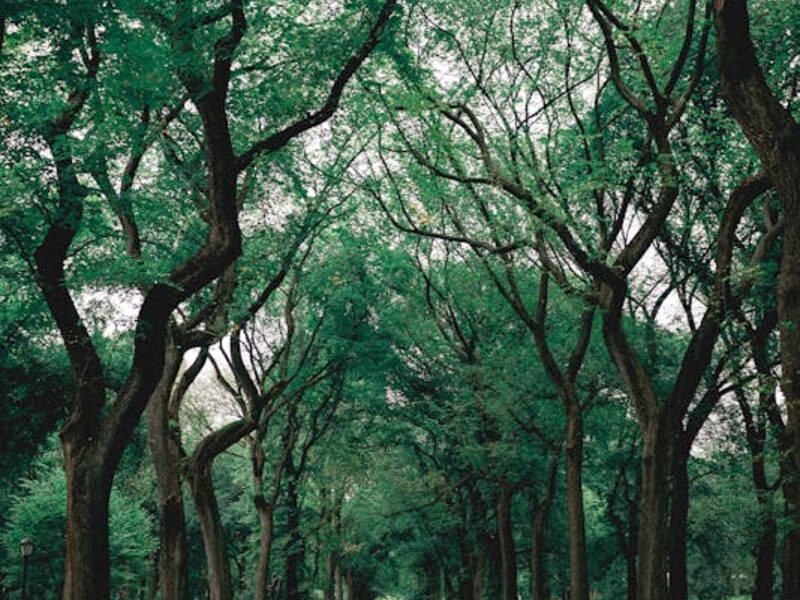
Sugar Land grew up around its trees. Drive through First Colony, Greatwood, Riverstone, or New Territory and the streets are lined with live oaks that were planted when those neighborhoods went in, plus a good number of older water oaks and pines that predate the master plan. Those big canopies are half the reason a lot of people bought here. They’re also the reason a hazardous tree in Sugar Land tends to be a big, expensive problem when it fails.
A “hazardous tree” is any tree with a defect serious enough that part of it, or all of it, is likely to come down on something that matters. It does not have to be dead, and it may not even look sick. A roof. A car. A person standing under it. The trick is that most hazardous trees still look mostly healthy from the street. You have to know where to look.
The signs worth taking seriously
Here are the ones we get called about most in Fort Bend County.
- Deadwood high in the canopy. Live oaks shed dead limbs constantly, and the big ones up top are the danger. A dead branch twenty feet up doesn’t announce itself, then a summer thunderstorm rolls through and it’s on your patio cover.
- Trunk cracks and seams. A vertical crack running up the trunk, or a seam where the bark has split and separated, means the wood underneath is failing. On co-dominant live oaks (two big trunks growing from one base) that split point is the classic failure zone.
- A lean that’s new or getting worse. A live oak that has leaned the same way for thirty years is usually fine. One that started leaning after a storm, with soil heaving or cracking on the opposite side of the base, is telling you the root plate is lifting.
- Fungus at the base. Mushrooms or hard shelf-like conks near the root flare point to internal decay. The bark can look solid while the heartwood is rotting.
- Thin, off-color canopy in summer. Sparse leaves, early drop, or a whole section that never leafed out well suggests the tree is declining, and declining trees drop limbs.
Any one of these earns a closer look. Two or more, especially on a tree that can reach your house, is worth a call.
Why Sugar Land soil makes it worse
Most of Fort Bend County sits on heavy clay, the kind of gumbo that swells when it’s wet and shrinks and cracks in a dry summer. That movement is hard on roots. During a drought the clay pulls back and tears fine roots; when the rain finally comes, the ground softens and a top-heavy tree has less to hold it. Live oaks are shallow-rooted to begin with, so a saturated yard after a tropical system is exactly when a marginal tree lets go.
We saw it in Sugar Land when Beryl came through in 2024, and Ike before that. Plenty of the trees that failed had been quietly compromised for years. The storm just finished the job.
Grading and construction make it worse too. A lot of these neighborhoods have had pools put in, drainage regraded, or sidewalks replaced, and any time soil gets cut away near a mature trunk, the root plate loses support. If your live oak had work done near its base in the last few years, keep an eye on it.
Hazardous doesn’t always mean removal
This part matters, because nobody wants to lose a forty-year-old oak. A hazardous condition often has a fix short of removal. Deadwood can be pruned out. A heavy, one-sided limb overhanging the roof can be reduced to take the weight off. A co-dominant stem with early splitting can sometimes be cabled to hold it together. Removal is the last resort, for trees where the structure is genuinely gone or the risk to the house is too high to manage.
The point is that somebody who reads trees for a living should make that call, not a guess from the driveway. A lot of Sugar Land yards also fall under HOA rules about tree removal and replacement, so knowing whether a tree can be saved is worth something before you file any paperwork.
When to get it looked at
If a tree has you wondering, that instinct is usually right. The dead one near the fence. The big oak leaning a little more toward the house every year. The one dropping branches every time the wind picks up. Those are the ones to get eyes on before hurricane season, not during it, when every crew in the area is booked solid.
We serve Sugar Land and the greater Houston area, and a hazard assessment is a free, no-pressure visit. Somebody walks the property, looks at the trees you’re worried about plus anything else worth flagging, and gives you a straight read on what needs doing and what doesn’t. If the tree’s fine, we’ll tell you it’s fine.
Book a free tree assessment → or call (832) 423-6445. Worst case, you get the all-clear and go back to your weekend.
Tree on your mind? Let's take a look.
Family-owned. Licensed and insured. Owner-supervised. We respond within 24 hours.